

 Donation


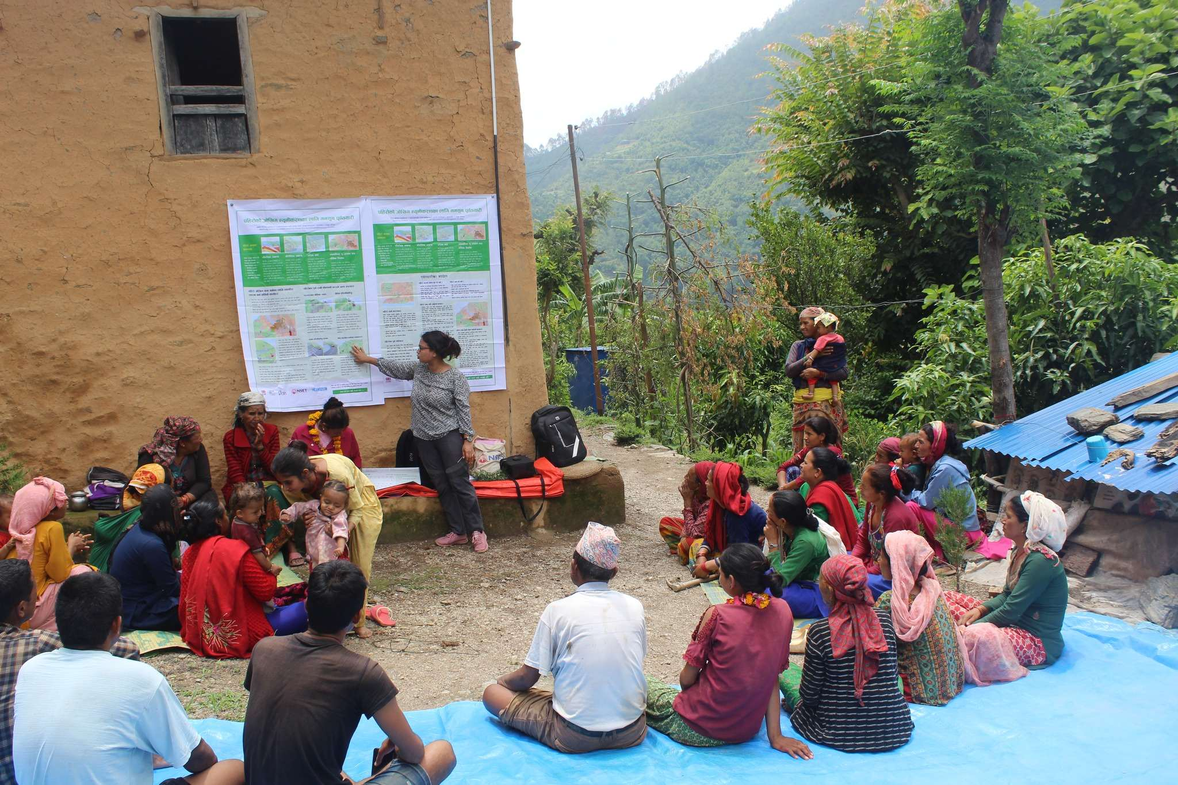
The “Advancing Landslide Anticipatory Actions for Disaster Risk Reduction and Management (ALARM)” project, led by Catholic Relief Services (CRS) Nepal, aims to enhance landslide preparedness across Jajarkot and West Rukum. Running from June 13 to July 27, 2024. The 45-day initiative is implemented in partnership with the National Society for Earthquake Technology (NSET)-Nepal and the Karnali Integrated Rural Development and Research Center (KIRDARC) Nepal with a total budget of £76,961.63. The project focuses on strengthening disaster risk management and reducing landslide impacts in all 13 local government areas of Jajarkot and Rukum West districts.
In response to these looming threats, an alert has been raised, and the ALARM project, implemented by CRS, NSET, and KIRDARC, was working with the aim of increase community awareness about the anticipated landslide impacts and prepare them to minimize their landslide risks for the upcoming monsoon. The present report outlines the major activities, their outcomes and challenges drawn from the project.
AIM AND OBJECTIVES
The main objective of ALARM project is to save the community people of Jajarkot and West Rukum from the consequences of regular weathering action or Landslide. The specific objectives are the following:
• To conduct community awareness activities in 146 locations of 13 local government of Jajarkot and West Rukum about risk, preparedness and mitigation measures of landslide.
• To conduct community orientation at 26 High Risk sites from Technical team
• To conduct CBDRR activities in 50 risk sites using citizen science approach (CFW).
• To enhance the capacity of local government in anticipatory actions by using equipped Local Emergency Operation Centers (LEOCs).
• To distribute the Protection against gender-based violence material items to 100 households from very high-risk communities.
MAJOR ACTIVITIES
• Community awareness and preparedness
• Vulnerable Peoples Data Collection
• Emergency Planning Document
• Preparation of IEC materials and distribution
• Preparation of radio jingly and broadcasting
• Search and Rescue (SAR) Material Distribution
• Landslide preparedness and response training
• Manual for searching weather forecasting platform
• Volunteer management system update.
MAJOR ACHIEVEMENTS
• Reached in the 122 locations/settlements of very high risk, high risk and medium risk community that is explained in the geological report of NDRRMA in all 13 local government of Jajarkot and West Rukum.
• Above 3700 population reach out just in first 9 working days and we continued for the ‘high-risk settlements’ within project period for multiple occasions – including, orientations, demonstrations, demographic surveys, sharing of preparedness plan, handover the logistical materials.
• Due to the impact of regular orientation about the possible risk of landslide in Chaupani ward 1 Bheri, consultation with ward office, 13 Houses were shifted in the safer location.
• Raised awareness among community members about landslide risks with high female ratio.
• Improved understanding of local geophysical changes and their effects on landslide susceptibility.
• Many people in the community believed that the situation arose from poor drainage management, leading them to commit to improving the drainage system. There was mention of planting small vegetation on landslide-prone slopes.
• Local landslide preparedness plan for each ward covering the high-risk settlement areas.
• Some shared plans to seal cracks and prevent water from entering. Several settlements expressed a commitment to protect vulnerable residents during the rainy season.
• A few households, like those in Vyusa and Laikham, considered relocating at night as a precaution.
• They also showed openness to using local materials like bamboo and backpacks in debris-prone areas.
LESSONS LEARNED
The key lessons, we preliminarily drawn after completion of such a large coverage in the very short period of time:
• Proper planning of target settlements, target populations and managing logistics and well as financial issues can help to better implementation of the program activities.
• Use of local people in emergency, trained them well and deployment in the field with full motivation that can get such a wonderful result.
• Awareness activities report reflects the sense of risk, urgency of preparedness and community eagerness to mitigate such risk and which is beyond our program resources, that is why strengthening of local government in resources is necessary.
• The programs demonstrated the critical need for ongoing community education and involvement in disaster risk management where the collaboration between local governments and communities is essential for sustainable risk mitigation.
• Future programs should consider more extensive geological assessments and the integration of modern technology to enhance early warning systems.