
 Donation
About Us
National Society for Earthquake Technology-Nepal (NSET) was founded by a meeting of professionals belonging to various technical as well as social aspects of earthquake disaster management, on June 18, 1993 with the vision "Earthquake Safe Communities in Nepal by 2020".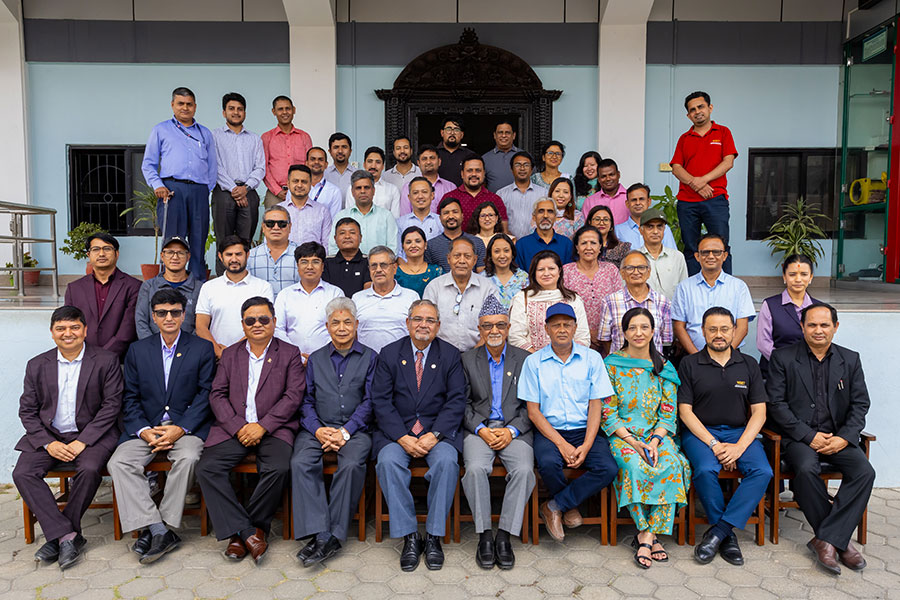
NSET Was formally registered as a non-governmental organization with the District Administration Office, Kathmandu, on 28 April 1994. NSET is affiliated with the Social Welfare Council under Section 13 of the Social Welfare Act, 1992, and was registered with the Council on 10 August 1998.
NSET was conceptualized with main objective “to foster the advancement of science and practice of earthquake engineering and technology for mitigating the earthquake risk and increasing the seismic safety, to enhance professionalism, professional engineering and scientific ethics and to further the objectives of the International Association for Earthquake Engineering (IAEE) as applicable to Nepal”.
Bringing “substantial change in the application of technology to the many facets of earthquake disaster management for saving the lives of the people” has ever since its inception.
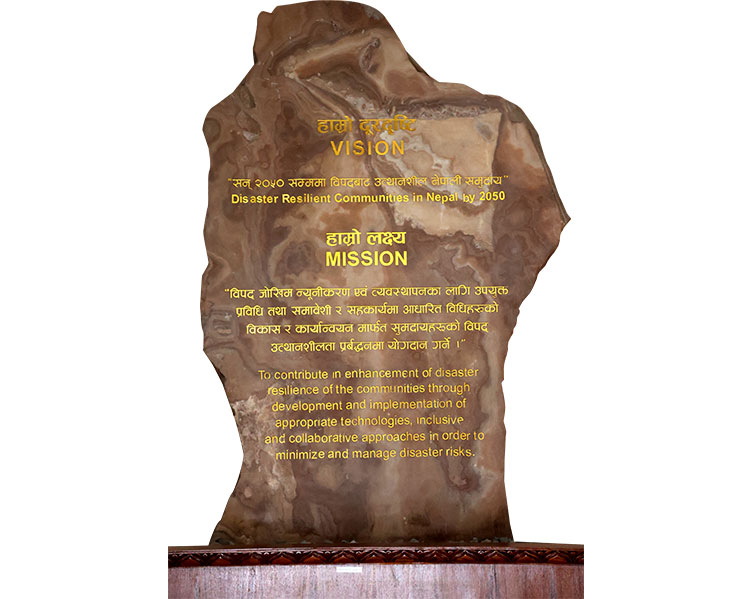
NSET was initially established with the vision of building “Earthquake Safe Communities in Nepal by 2020.” However, recognizing Nepal’s growing exposure to multiple hazards and climate risks—and the need for collective, long-term efforts—NSET revised its vision in 2021 to “Disaster Resilient Communities in Nepal by 2050.” This shift reflects the evolving risk landscape and NSET’s commitment to scaling up its contributions toward enhancing resilience.
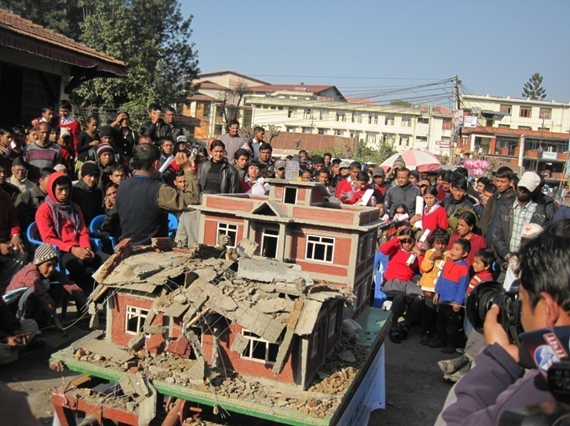
NSET works across the full spectrum of disaster risk management, delivering integrated approaches to reduce disaster risks and build resilient communities. Its expertise includes risk assessment and mitigation for multi-hazard risks, seismic analysis, and risk-sensitive planning; capacity building and training for engineers, architects, urban planners, masons, security forces, government officials, teachers, schoolchildren, and communities; and safer infrastructure through earthquake-resistant design, structural vulnerability assessment, retrofitting, and the safety of critical infrastructure and school buildings.
NSET also leads emergency preparedness and response, including emergency and hospital preparedness planning, contingency planning, earthquake drills, simulation exercises, and emergency response training. The organization advances anticipatory action, climate change adaptation, nature-based solutions, and early warning systems for landslides and floods. It supports policy development and disaster risk governance through building codes, risk-sensitive land-use planning, and disaster risk reduction (DRR) frameworks, while promoting research, innovation, knowledge management, and Comprehensive School Safety across Nepal.
Since its establishment, NSET has implemented more than 150 programmes and projects, working in 706 municipalities across Nepal and in 10 countries across the Asia-Pacific region, contributing to safer, more resilient communities.
CORE IDEOLOGIES AND VALUES
We at NSET, in order to enjoy enduring success through institutionalization of intended impacts in the communities in long term, have absolute clarity in our core values and a core purpose that remain fixed, while our strategies and practices endlessly adapt to the changing world.
Our core ideologies and values, which forms a system of timeless guiding principles and tenets are:
1. Community; our Raison d’être (Reason of existence)
2. Recognition and Respect for indigenous knowledge, approaches, technologies, systems and practices
3. Accountable, Responsible, Sustainable and Disciplined Actions
4. Outcome and Impact based mobilization, exploration and learning
5. Equitable, Inclusive, Collaborative working culture and approach
6. Apolitical Existence
7. Respect for the law of the land
8. Learn, Grow and Strive for Excellence as a team
Our Mission & Vision

Vision
Disaster Resilient Communities in Nepal by 2050"

Mission
"To contribute in enhancement of disaster resilience of the communities through development and implementation of appropriate technologies, inclusive and collaborative approaches in order to minimize and manage disaster risks."