

 Donation
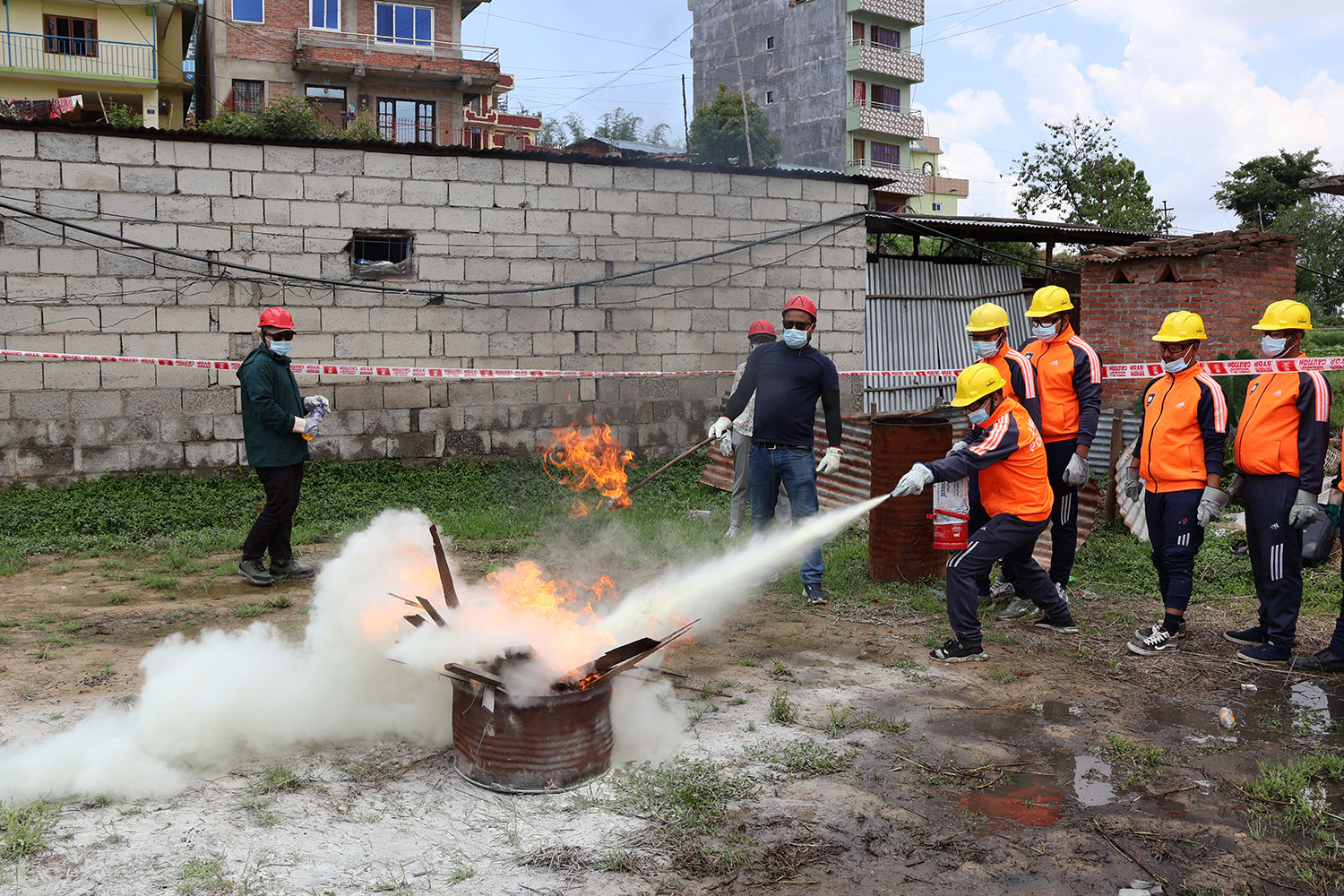
Volunteer Mobilization Course is a structured capacity-building program developed under the National Disaster Risk Reduction and Management Authority (NDRRMA), Nepal, to prepare community volunteers and local responders to effectively support disaster risk reduction, preparedness, emergency response, and early recovery.
The course focuses on developing a trained, organized, and locally deployable volunteer network that can complement government agencies, security forces, humanitarian organizations, and local governments during disasters.
NSET has organized Volunteer Mobilization Courses in different locations across Nepal to strengthen the capacity of disaster management volunteers and local communities.
Objective
The main objective of the course is to:
- Build the knowledge and practical skills of disaster volunteers.
- Strengthen community-level preparedness and response capacity.
- Develop volunteers’ ability to support search and rescue, first aid, evacuation, relief, and emergency coordination.
- Familiarize volunteers with the disaster management system, Incident Command System (ICS), and local emergency coordination mechanisms.
- Promote inclusive and risk-informed volunteer mobilization, including consideration of women, children, older people, and persons with disabilities.
- Establish a pool of trained volunteers who can be rapidly mobilized during emergencies.
Training Conducted

Key Outcome
The following are key outcomes of the training.
1.Enhanced Local Response Capacity
Volunteers were equipped with practical skills in first aid, search and rescue, and emergency response, enabling them to act as first responders during disasters.
2. Strengthened Community Resilience
Communities have become more self-reliant and better prepared to manage disasters, reducing dependency on external aid and minimizing loss of life and property
3. Improved Coordination with Authorities
Trained volunteers are assumed able to effectively collaborate with local governments, security forces, and health services, ensuring a unified response during emergencies.
4. Practical Experience through Simulations
Scenario-based exercises provide hands-on experience in managing real-life disaster situations, enhancing confidence and decision-making skills.
5. Increased Public Awareness
Training will raise awareness about disaster risks, preparedness measures, and safety protocols, fostering a culture of prevention and readiness.
6. Promotion of Inclusive and Ethical Practices
Volunteers will be sensitized to gender, disability, and social inclusion, ensuring that disaster response is equitable and respectful of all community members.
Way Forward
1. Preparation & Contextualization
- Localize the content: Translate training materials into local languages (e.g., Tharu, Maithili) and simplify technical terms for community understanding.
- Integrate indigenous knowledge: Include locally used early warning signs, coping mechanisms, and traditional DRR practices alongside NDRRMA modules.
- Hazard-specific focus: Adapt the curriculum to focus more on hazards that are locally frequent (floods in Terai, landslides in hills, earthquakes in seismic belts).
II. Inclusive Volunteer Selection
- Ensure diversity: Actively recruit women, youth, and marginalized community members to ensure broad representation.
- Leverage community structures: Use existing ward disaster management committees, mothers’ groups, and youth clubs to identify motivated participants.
III. Training Delivery Approach
- Use participatory methods: Group discussions, scenario-based role plays, and hazard drills are more engaging than lectures.
- Include field demonstrations: Practice evacuation, first aid, search & rescue, and communication drills instead of purely classroom sessions.
IV. Coordination & Partnership
- Engage local government early: Get the municipality or ward office to officially endorse the training and link it to their Local Disaster and Climate Resilience Plan (LDCRP).
- Involve multi-agency facilitators: Combine NDRRMA-certified trainers with local Red Cross security forces, and health workers for richer content.
- Avoid duplication: Map out which agencies have already trained volunteers to ensure complementarity.
V. Motivation & Retention
- Provide recognition: Issue certificates signed by both NDRRMA and the municipality and publicly acknowledging volunteer contributions.
- Create a follow-up plan: Assign clear roles to volunteers in local DRRM activities and emergency response teams.
- Offer small incentives: Cover travel costs, provide training kits (first aid kit, whistle, torch), or give volunteer ID cards to enhance their identity and pride.
VI. Sustainability & Continuous Learning
- Conduct refresher courses: Schedule at least one drill or refresher every 6–12 months to keep skills sharp.
- Link volunteers to digital platforms: Use NDRRMA or municipal communication groups (e.g., Viber, WhatsApp) for rapid alerts and coordination.
VII. Monitoring & Evaluation
- Track participation & skill application: Keep a database of trained volunteers and their involvement in drills or actual disaster events.
- Measure impact: Check if trained volunteers are engaged in preparedness and response within 3–6 months.