

 Donation


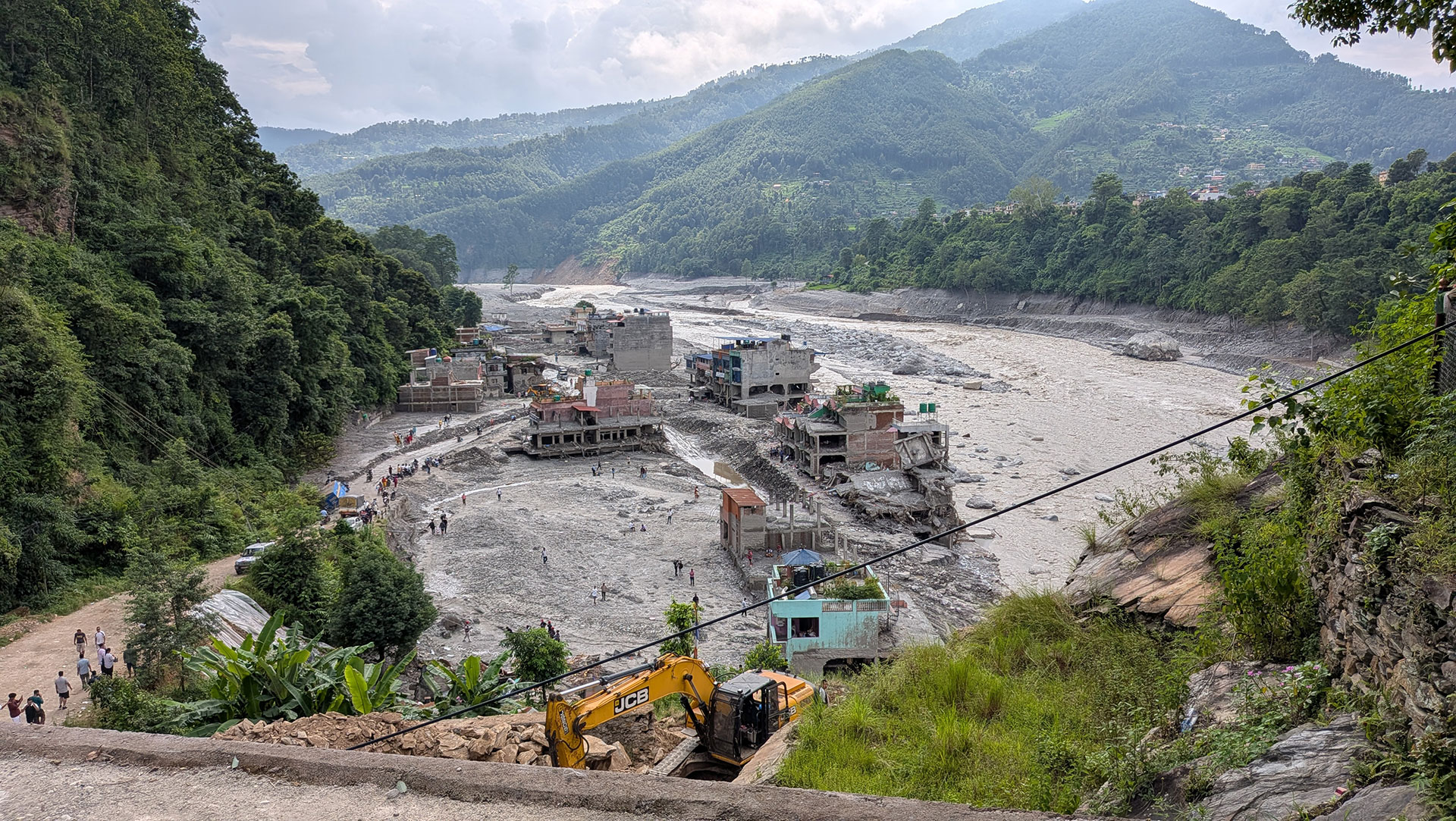
On 26 August 2026, a sudden and devastating flash flood entered the Bhotekoshi–Trishuli river from the Nepal–Tibet border, causing widespread loss of life and extensive destruction across several districts. The flood severely affected Rasuwa and Nuwakot District. In Rasuwa Timure, Rasuwagadhi, and Syabrubesi locations were severely swept away causing significant loss of human and properties including infrastructure. Similarly, in Nuwakot; Belkotgadhi, Bidur, Tarkeshwor, and Kispang Palikas were severely affected. The effects of the flood also extended downstream to parts of Dhading, Gorkha, and Chitwan districts. According to NDRRMA more than 1400 people have died and 5,200 people remain missing. More than 20,000 households have either been affected or displaced. A large number of families has been placed in schools, public buildings, and community facilities temporarily. Many fanilies has been hosted by their relatives and larger family members (https://ndrrma.gov.np/np/situation-report/421).
The flood has caused extensive damage to house and household assets, roads, bridges, hydropower facilities, markets, and other critical infrastructure, leaving many families without safe and adequate shelter. Loss of essential belongings, including food stocks, clothing, documents, household equipment, and other productive assets, have further increased immediate humanitarian needs. Families whose homes have been damaged or destroyed face significant challenges in rebuilding (https://ndrrma.gov.np/np/study-report/416)
Recognizing the scale and severity of the disaster, the Government of Nepal has declared Rasuwa, Nuwakot, and Dhading as disaster-hit districts under a three-month emergency period. The GoN has directed all concerned authorities to mobilize available resources for search and rescue, emergency relief, early recovery, reconstruction, and rehabilitation. As immediate lifesaving operations continue, there is an urgent need for coordinated support from government authorities, humanitarian agencies, local organizations, communities, and development partners to address the rapidly evolving needs of affected populations and to support a safe, inclusive, and resilient recovery.
Objectives
- To improve access to safe, dignified, and appropriate shelter through emergency shelter assistance, rental support, temporary/transitional shelter solutions, and technical support for households whose homes have been damaged or destroyed.
- To restore access to essential services and community infrastructure by supporting the rehabilitation of critical access routes, foot trails, water supply systems, community facilities, schools, and other priority infrastructure in coordination with local governments.
- To support continuity of education for affected children and adolescents through temporary learning arrangements, rehabilitation of essential school facilities, provision of learning materials, and measures to reduce the risk of prolonged school interruption and dropout.
- To restore and protect household livelihoods and economic recovery through cash-based assistance, replacement of productive assets, temporary employment, skills development, and other locally appropriate livelihood recovery measures.
- To strengthen community and local-government capacity for early recovery and disaster risk reduction, including participatory recovery planning, hazard-informed settlement planning, preparedness, coordination, and integration of disaster risk reduction and climate resilience measures.
- To assess and reduce emerging geohazard risks in flood-affected areas, including landslides, slope instability, riverbank erosion, debris-flow sources, channel migration, and other cascading hazards, and to generate risk information to guide safe settlement, reconstruction, infrastructure rehabilitation, and potential relocation decisions.
Key Activities
Activity 1: Rental assistance and safer accommodation
Activity 2: Mason training and on-the-job skills development (linked to transitional shelter construction and support to livelihood)
Activity 3: Debris clearance through cash for work
Activity 4: Continuity and restoration of local government services
Activity 5: Construction of transitional shelter based on locally available materials and supply NFI need
Activity 6: Digital cash/Voucher assistance for nutritionally vulnerable women
Activity 7: Construct 2 Transitional Learning Centers (TLCs) including furniture, toilets and hand-washing facilities: