
 Donation
Tomorrow’s Cities is the UK Research and Innovation (UKRI) Global Challenges Research Fund (GCRF) Urban Disaster Risk Hub—a five-year global interdisciplinary research hub. It is one of 12 UKRI GRCF Hubs funded through a UKRI Collective Fund award, as part of the UK AID strategy to put research at the heart of efforts to deliver the United Nation’s Sustainable Development Goals (SDGs). Tomorrow’s Cities (TC) is a multi-city, multi-hazard initiative focused on reducing disaster risk by integrating resilience thinking into urban planning and development processes. The project is committed to risk-informed planning, co-creation, and promoting inclusive and interdisciplinary approaches in city development. By combining technical inputs with community aspirations, TC aims to foster sustainable and resilient urban development. In Nepal, NSET worked at Khokana in the first phase and led a detailed deployment at Rapti in the second phase, resulting in the drafting of a risk informed and participatory masterplan owned by the Provincial Infrastructure Development Authority (PIDA) and endorsed by the provincial and local governments.
GOAL
The primary objective of TC is to support the city’s urban planning process by embedding participatory approach and disaster resilience in its planning process through the application of the Tomorrow’s Cities Decision Support Environment (TCDSE) tool. This is achieved by: Integrating climate change accounted, multi-hazard risk assessments with long-term urban development scenarios. Engaging a diverse range of stakeholders—including vulnerable groups—through participatory planning methodologies. Institutionalizing disaster-resilient planning frameworks at both local and central levels to ensure continuity and uptake of TC processes.
GEOGRAPHICAL COVERAGE
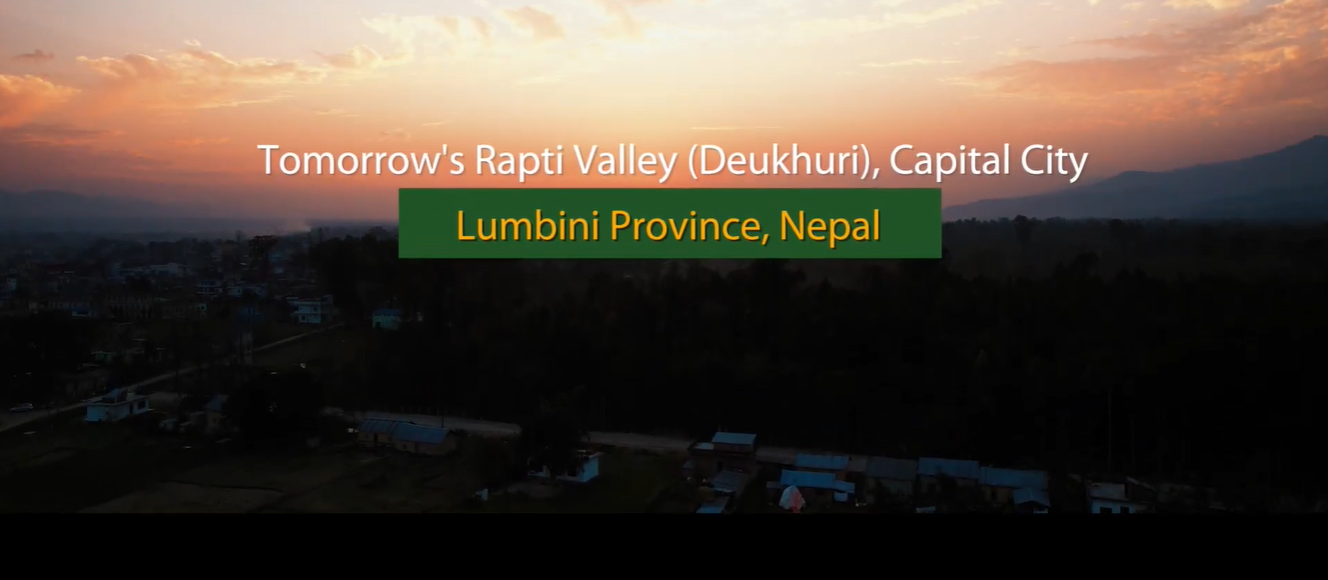
The project was implemented in Kathmandu, Istanbul, Quito, Nairobi, Chittagong, Cox’s Bazaar, Nablus, Rapti, Dar Es Salaam and Nakuru. In Nepal, it was implemented at Khokana (LMC ward. 21) and at Rapti valley, the capital of Lumbini Province (including 14 wards and 3 municipalities)
OVERALL PROGRAM HIGHLIGHTS
Overall Program Highlights – Tomorrow’s Cities (Rapti)
Rapti City Master Plan Integration: Through the Tomorrow’s Cities initiative, Rapti City’s Master Plan was revised to integrate community-driven and risk-informed urban planning. The collaboration with the Provincial Infrastructure Development Authority (PIDA) led to the incorporation of disaster resilience, long-term planning, and hazard risk assessments.
Community and Stakeholder Engagement: Six disaggregated community groups—Tharu, Migrants, Squatter, Madhesi Muslim & Dalit, Ethnic communities, and Planners—actively participated in workshops, contributing to urban scenario development, hazard mapping, and policy discussions. This participatory approach ensured inclusive planning across socio-economic levels and local power structures.
Work Package Workshops:
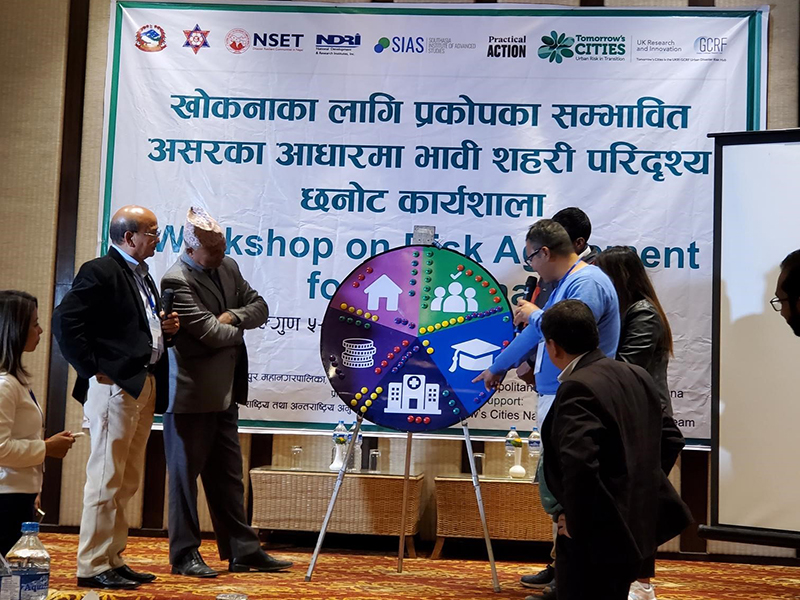
Future Visioning Workshop (WP1): Engaged 56 community members across disaggregated groups to co-create visions for a resilient city, utilizing tools like the “river of life” and the “wheel of urban assets.”
Visioning Scenario Development (WP2): Produced detailed land use plans, future exposure data, and policy databases, validated in a workshop attended by 84 stakeholders.
Risk Agreement Workshop (WP4): Facilitated risk discussions with 62 participants, covering disaster impacts and mitigation strategies using a web-based dashboard for hazard, exposure, and vulnerability analysis.
Capacity Building: Trained 165 professionals through four TCDSE modules in Rapti, strengthening local expertise in future visioning, scenario development, multi-hazard impact assessment, and risk agreement processes.
Hazard and Impact Assessments: Multi-hazard risk assessments for floods, earthquakes, and landslides were conducted, including fragility and vulnerability models for infrastructure and communities. Outputs like earthquake intensity maps, flood hazard maps, landslide susceptibility maps provided a visual guide for future urban planning and risk mitigation strategies.
Public Awareness and Outreach:
Art Competitions: Engaged 37 students from 9 schools in envisioning Rapti’s future as a disaster-resilient, green city.
Media Interaction: 25 journalists attended a media interaction event to discuss disaster risk reduction (DRR) and the updated Master Plan for Rapti City.
Provincial and National-Level Impact: TCDSE outputs influenced disaster resilience policies in Lumbini Province with declaration signed among key government authorities and bodies working on DRR for building safer Lumbini. Declaration signing hosted by ESD event organized by TC -NSET. TCDSE featured in the National Disaster Risk Reduction & Management Authority’s (NDRRMA) framework, including the Risk Sensitive Land Use and Development Planning Guidelines.
The Khokana implementation engaged Ward Officials, WDMC, Sano Khokana community, and marginalized groups and three planning scenarios were developed, addressing earthquake and flood risks, focusing on housing, social infrastructure, and livelihoods. Two day Risk Agreement Workshop included 63 participants fostered inclusive disaster-resilient urban planning with community-driven risk agreements. A building guideline for Khokana was developed, incorporating local architecture, construction materials, and traditional outlook to ensure disaster-resilient construction while preserving the cultural heritage of the community.